

Information Technology Program
Information Technology Program
Program Code: 7480201
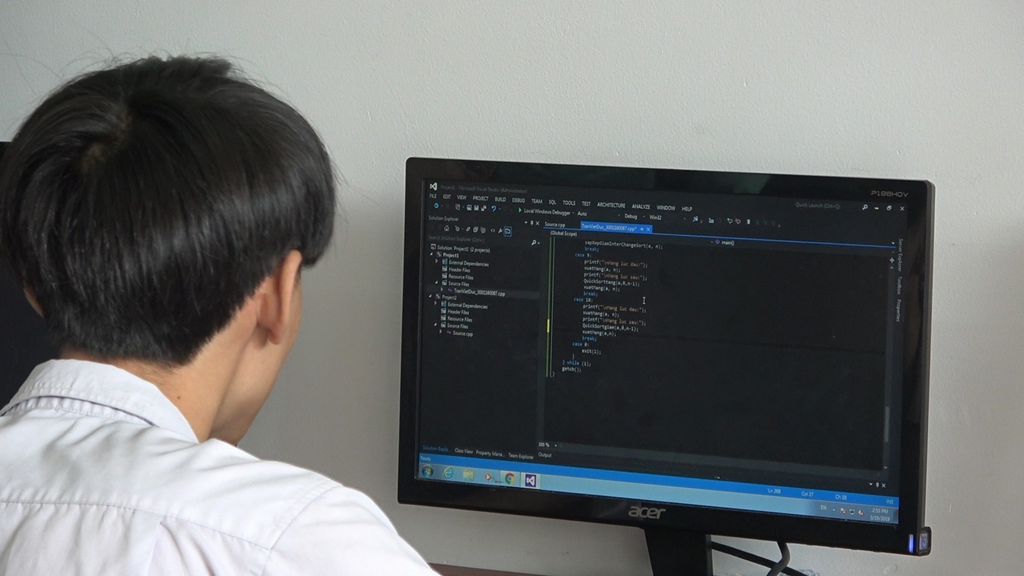
Information Technology (IT), in a broad sense, refers to the use of computers and software for the creation, storage, processing, and transmission of information. By studying this program, students are provided with in-depth knowledge depending on their chosen specialization, such as Computer Science, Computer Engineering, Information Systems, Computer Networks and Communications, and Software Engineering.
|
1. Program Overview |
|
The Information Technology (IT) program aims to educate highly qualified professionals with a solid foundation in computer science, software engineering, information systems, artificial intelligence, big data, and computer networks. The curriculum equips students with the knowledge and skills required to analyze, design, develop, and manage modern information technology systems while fostering teamwork, communication, research capability, innovation, and professional ethics. Students are exposed to emerging technologies such as Artificial Intelligence (AI), Machine Learning, Big Data, Cloud Computing, Blockchain, and the Internet of Things (IoT), enabling them to meet the demands of digital transformation and global integration. The program is structured into two stages, allowing students to obtain a Bachelor's degree and continue their studies toward an Engineer degree through advanced specialized training. |
|
|
|
2. Curriculum Structure |
|
The program consists of 151 credits (excluding Physical Education and National Defense Education) and is organized into four major knowledge blocks:
The curriculum is delivered in two stages. Stage 1 enables students to complete the Bachelor of Information Technology degree. Stage 2 provides advanced professional training leading to the Engineer of Information Technology degree, with specialized courses in Artificial Intelligence, Data Analytics, Software Engineering, Computer Networks, and Digital Transformation. |
|
|
|
3. Course List |
|
3.1 General Education Courses
Elective courses:
3.2 Fundamental IT Courses
Elective courses:
3.3 Specialized Courses
Students choose one of the following specialization tracks:
Representative specialized courses include:
3.4 Advanced Engineering Studies Core courses:
Advanced elective courses:
|
|
|
|
4. Admission Information |
|
The Information Technology program admits applicants who have graduated from high school or an equivalent qualification through admission methods announced annually by Ho Chi Minh City University of Industry and Trade (HUIT). The University follows the admission regulations issued by the Ministry of Education and Training (MOET) and does not conduct early admissions. Admission results will be announced according to the official schedule specified by MOET. Applicants may apply through one of the following admission methods:
Admission Subject Combinations
|
|
|
|
5. Program Duration and Credit Requirements |
|
The standard duration of the program is four years. Students are required to complete 151 credits, excluding Physical Education and National Defense Education courses. Students who complete Stage 1 are awarded the Bachelor of Information Technology degree. Those who continue and successfully complete Stage 2 will be awarded the Engineer of Information Technology degree. |
|
|
|
6. Career Opportunities |
|
Graduates of the Information Technology program can pursue careers in domestic and international organizations operating in information technology, software development, information systems, e-commerce, networking, and telecommunications. Potential positions include:
Graduates may also work in government agencies, research institutes, technology centers, and research and development organizations. Furthermore, they are well prepared for postgraduate studies and research activities in information technology and related disciplines. |
|
|
|
7. Program Learning Outcomes (PLOs) |
|
PLO1. Fundamental Knowledge Apply fundamental knowledge of science and society, including mathematics, information technology, political theory, law, and management, to professional activities in information technology.
PLO2. Disciplinary and Specialized Knowledge Analyze and integrate broad disciplinary and specialized knowledge together with practical expertise to solve problems in information technology.
PLO3. Professional Skills Demonstrate professional competencies and systems-thinking skills to develop solutions for information technology problems.
PLO4. Lifelong Learning and Research Demonstrate the ability to engage in self-directed learning, research, and knowledge discovery in information technology.
PLO5. Professional Ethics Demonstrate professional ethics and responsibility, including integrity, honesty, and discipline.
PLO6. Teamwork and Collaboration Work effectively in teams and participate in collaborative learning, research, and professional activities.
PLO7. Communication and Foreign Language Proficiency Communicate effectively and use foreign languages proficiently in professional contexts.
PLO8. Autonomy and Entrepreneurship Analyze social and business contexts, make independent professional judgments, and propose innovative solutions or entrepreneurial initiatives in information technology.
PLO9. Leadership and Continuous Improvement Plan, coordinate, evaluate, and improve professional activities in information technology effectively.
Competency Scale
|
See more :
- [ANNOUNCEMENT] Final Exam Schedule for Semester 2, Academic Year 2025 - 2026 (Phase 2) - Regular Undergraduate Program
- [ANNOUNCEMENT] Course Registration for Semester I (Academic Year 2026 – 2027) for Undergraduate Students
- ARTIFICIAL INTELLIGENCE PROGRAM
- DOCTORAL PROGRAM IN INFORMATION TECHNOLOGY
- FACULTY MEMBERS BY DEPARTMENTS